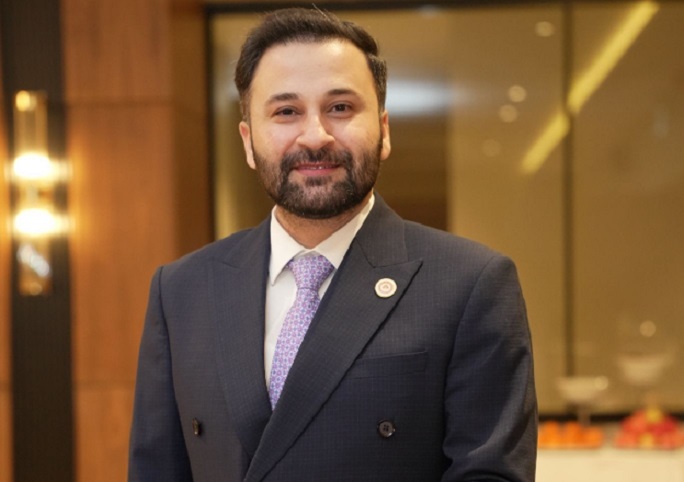
By Qaiser Nawab, Chairman BRISD
President Xi Jinping’s state visit to the United States from September 23 to 25 comes at a time when predictability has become a scarce commodity in international affairs. The visit, at the invitation of President Donald Trump, follows Trump’s state visit to China in May and marks another round of direct leader-level engagement within a relatively short period. The White House has scheduled a formal welcome, talks and a state dinner in Washington.
The ceremony will inevitably attract attention. But the more consequential part of the visit lies elsewhere: in the effort to keep senior-level diplomacy functioning between two countries whose decisions affect markets, supply chains, technology, climate policy and international institutions far beyond their own borders.
There is a temptation to judge important visits almost immediately — by the number of agreements announced, the wording of a joint statement or whether one side appears to have secured more than the other. That is often a poor measure of diplomacy.
Meetings between major powers rarely settle complicated questions in a single sitting. Their practical value can be more modest, but still significant. They create opportunities to clarify positions, reduce the risk of misunderstanding, and give officials below the presidential level room to continue working on difficult issues.
The useful question, then, is not whether this visit produces a dramatic breakthrough. It is whether repeated high-level contact can make a complicated relationship more predictable and more manageable.
Diplomacy is also about managing uncertainty
China’s Foreign Ministry has said Xi and Trump will exchange views on major issues concerning bilateral relations as well as questions relating to world peace and development. Beijing has also said it hopes the visit will strengthen dialogue and cooperation while allowing differences to be managed appropriately.
The language is broad, as diplomatic language usually is. What deserves greater attention is the pattern behind it.
Trump travelled to China in May, where the two leaders held talks, and Xi’s September visit provides another opportunity for direct discussion only a few months later. Frequent contact does not erase disagreements, but it can establish habits of communication.
Those habits matter.
Economic decisions made by large economies can travel quickly across borders. Changes involving tariffs, technology rules, investment, energy or supply chains can affect businesses and governments thousands of kilometres away. Even when governments cannot remove uncertainty altogether, clearer communication can prevent avoidable uncertainty from being added to it.
There is also a tendency to understand diplomacy mainly through signed agreements. Yet some of its most valuable work is preventive and therefore far less visible.
One government may leave a meeting with a clearer understanding of what another considers negotiable. Officials may agree to keep technical discussions going. A policy decision may be subjected to further consultation before implementation. Communication channels may remain available during the next disagreement.
None of this produces spectacular headlines.
It can, however, matter to businesses making investment decisions, governments managing economic policy and countries whose growth depends on reasonably stable international trade.
This is increasingly relevant because economic and technological questions now overlap. Decisions involving artificial intelligence, digital trade, data, energy and advanced manufacturing are no longer narrow commercial issues. They influence development strategies worldwide.
Diplomatic predictability therefore has an economic value of its own.
Why the wider world will be watching
For developing countries, including Pakistan, the significance of the visit is largely practical.
Pakistan’s economic future depends on an international environment in which trade remains accessible, investment can move across borders, and technological change does not create unnecessary barriers for countries still building their digital and industrial capacity.
The same is true across much of the developing world.
Countries seeking growth need access to markets, investment, affordable technologies and functioning international institutions. They also need sufficient stability to make long-term decisions about infrastructure, exports, energy and technological development.
That is why high-level diplomacy between major economies matters beyond the bilateral relationship itself.
But this should not be overstated. A state visit does not automatically make the global economy more stable, nor does diplomatic language guarantee policy continuity. Developing countries will ultimately judge international economic arrangements by their consequences: whether markets remain accessible, technologies become more widely available, and institutions respond to the concerns of countries at different levels of development.
The September visit is therefore best approached with neither exaggerated expectations nor unnecessary scepticism.
The White House has prepared the full symbolism of a state visit. President Trump is due to receive Xi at Joint Base Andrews, followed by a formal state arrival ceremony and state dinner on September 24. Such rituals have a purpose. They demonstrate that both governments attach importance to maintaining formal channels of communication.
But protocol is only the beginning.
The more meaningful effects will become visible after Xi leaves Washington: whether communication continues, whether officials can address problems before they become larger ones, and whether practical cooperation can continue alongside areas of disagreement.
In an international environment already carrying considerable economic, technological and security uncertainty, diplomacy does not have to resolve every problem to serve a purpose.
Sometimes its most important function is quieter: preserving the ability to talk when circumstances become difficult.
That may ultimately be the more useful way to understand Xi’s visit. Its significance will not be measured only by the photographs or ceremonies that emerge from Washington, but by whether the channels behind them remain active after the state visit is over.Author: Qaiser Nawab is Chairman of the Belt and Road Initiative for Sustainable Development (BRISD), an international platform fostering cooperation and innovation across Asia, Africa, and Latin America. He can be reached at